
It wouldn’t be right to retire our long-lived fax machine without a proper goodbye.
Media commentary by Steve Dunlop
Listen to audio version below (recommended):
The horse gave way to the automobile. The stagecoach yielded to the train and the plane. The BlackBerry was succeeded by the iPhone.
And now, after a remarkably long run, the fax machine is finally reaching the end of the line.
We realize this isn’t exactly breaking news. The fax machine has been on the way out for years. Decades, really. But before we pull the plug on ours, we thought it deserved a little historical appreciation—and perhaps a proper goodbye.
The idea behind the fax machine is much older than most people realize.
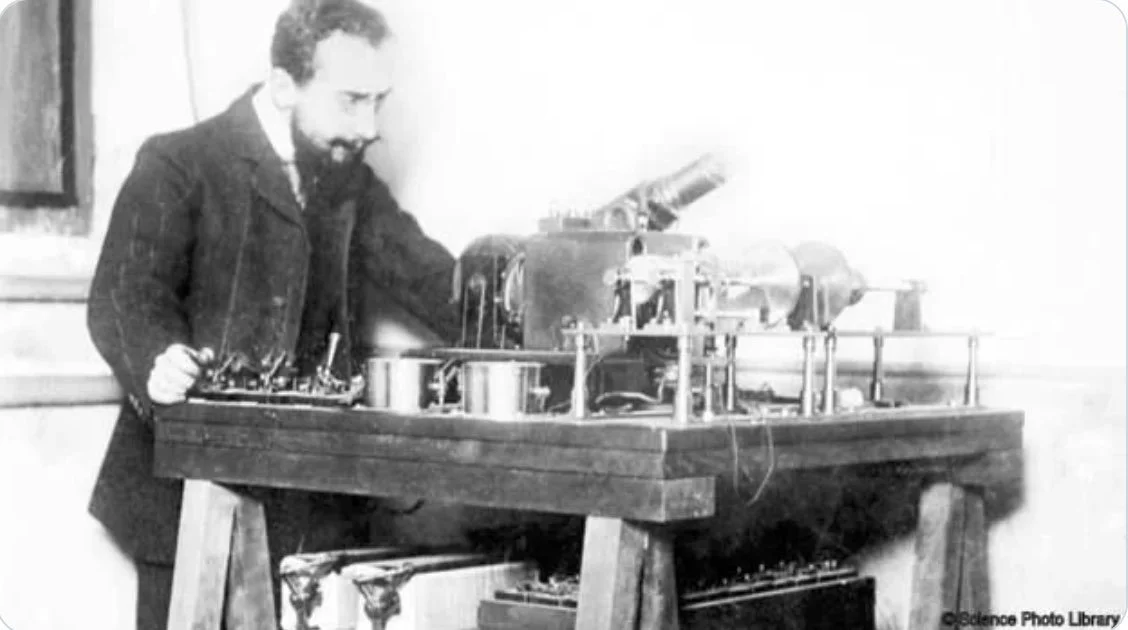
In 1843, Scottish inventor Alexander Bain patented an “Electric Printing Telegraph,” a crude device that could scan an image and reproduce it at a distant location. It was nothing like the office fax machine we came to know, but the essential idea was there: turn an image into electrical signals and recreate it somewhere else.
By the 1860s, Giovanni Caselli had developed the pantelegraph, a considerably more practical system for transmitting handwriting and images over telegraph lines. In 1865, the French telegraph service began operating the world’s first commercial facsimile service, linking Paris and Lyon.
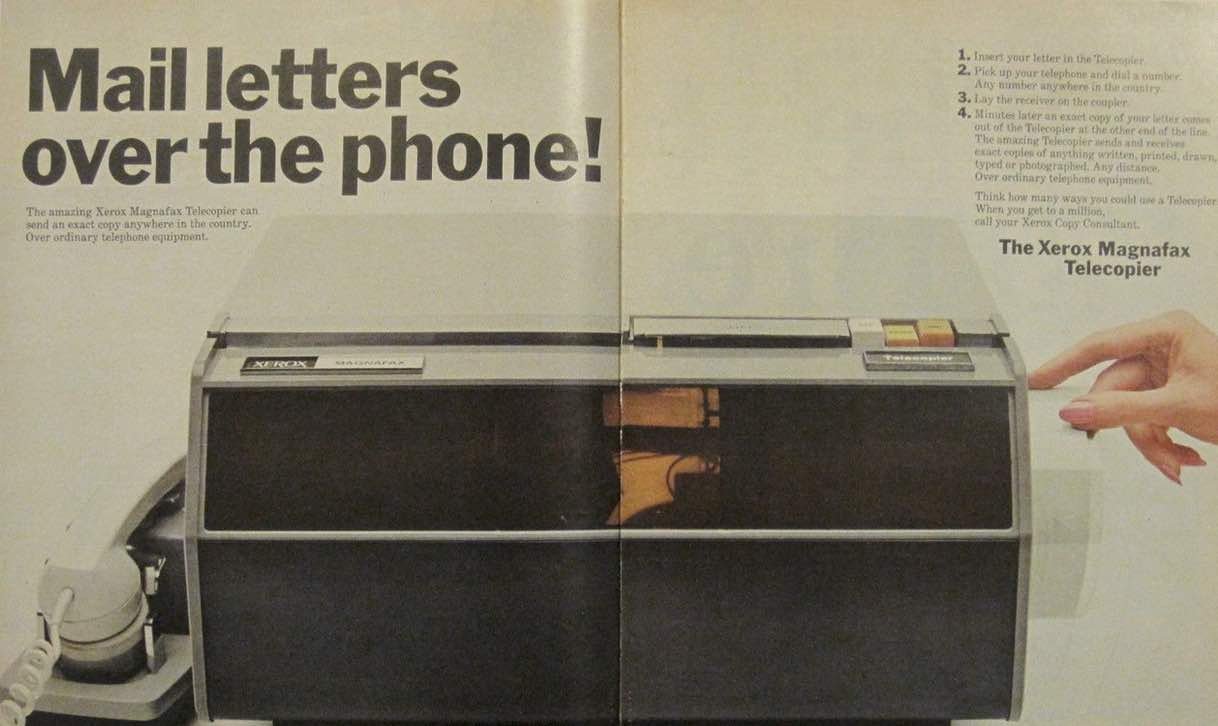
It would take another century of technological development before the idea became a practical business tool. In 1964, Xerox introduced Long Distance Xerography, or LDX, a landmark in the development of the modern commercial fax machine. It was extraordinary: an 1,100-pound behemoth that could transmit a document over telephone lines. Two years later came the much smaller Magnafax Telecopier, which could be connected to an ordinary telephone line. Xerox advertised it with the wonderfully futuristic promise: “Mail letters over the phone!”
The early machines were big, clunky and, by today’s standards, astonishingly slow. But they performed a minor miracle. A piece of paper sitting on a desk in one location could be reproduced on a desk hundreds or thousands of miles away without a courier, an airplane or the postal service.
I got an early glimpse of that miracle in the 1970s, during my first job in radio. I worked in a news bureau on Long Island where a Daily News reporter had one of these early fax machines. He made a telephone call, and then placed the telephone handset into a cradle on the machine. The cradle was an acoustic coupler: the machine translated the document into a series of electronic tones that traveled through the handset and across the ordinary phone line. At the other end, another machine translated those tones into a copy of the original page. As I remember it, transmitting a single page took about three minutes. At the time, it seemed like science fiction.
And the fax machine was about much more than convenience.
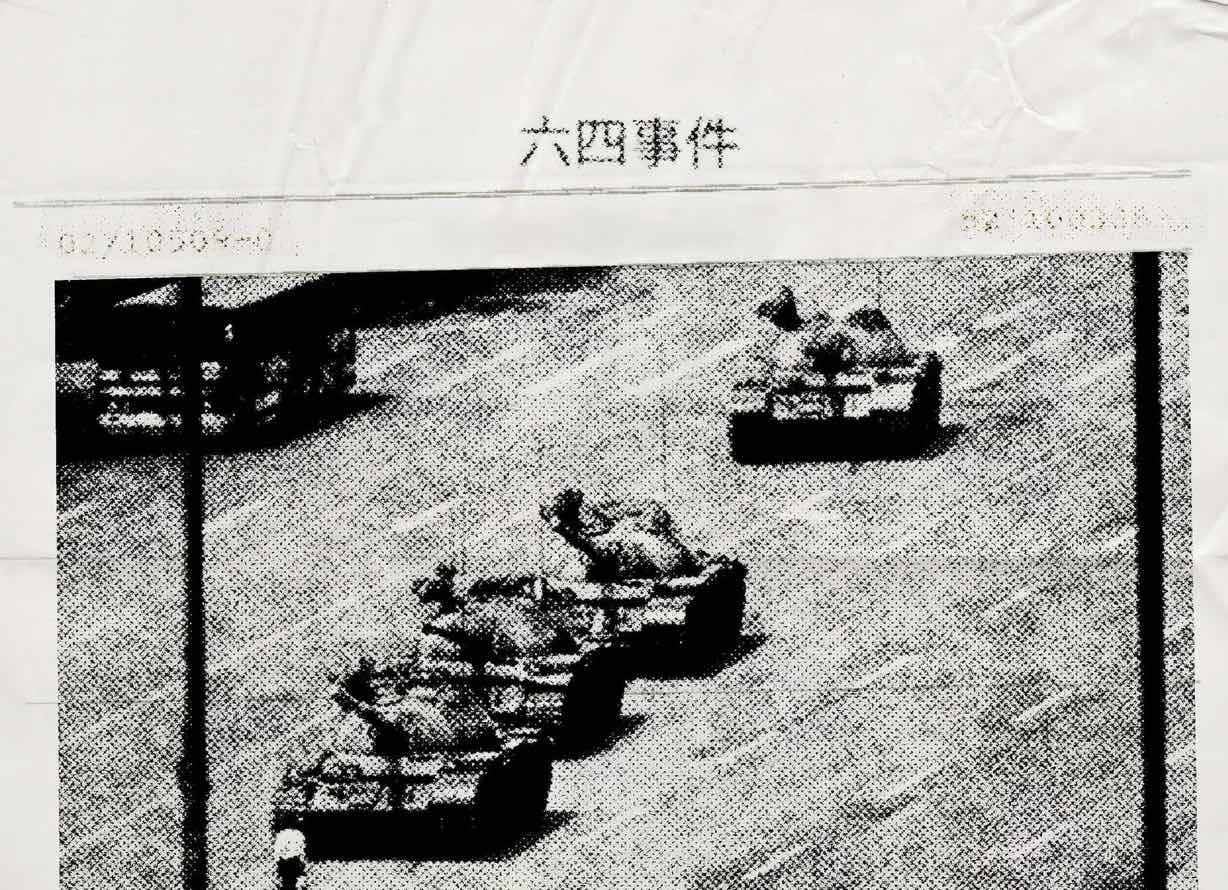
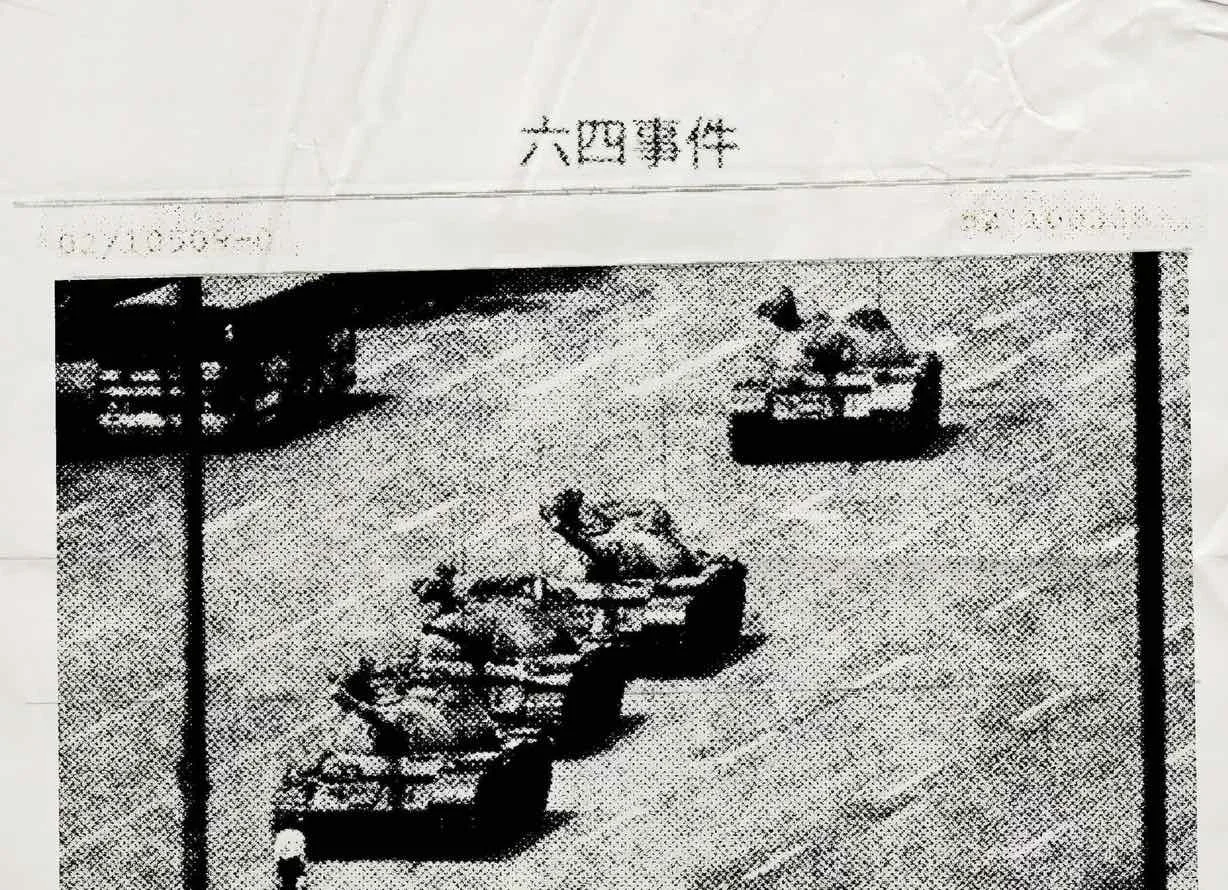
In 1989, during the pro-democracy demonstrations and subsequent crackdown in Tiananmen Square, fax machines became an important weapon against China’s information blockade. Chinese students and supporters overseas collected reports and photographs from Western news organizations and faxed them into China, where the government was suppressing information about what was happening in Beijing. Students at American universities established fax networks; others sent reports and photographs to businesses, universities and individuals in Chinese cities. Time Magazine reported at the time that the technology was being used to penetrate the official news blackout.
Of course, the fax eventually became something much less romantic. Lawyers faxed contracts. Doctors faxed medical records. Businesses faxed purchase orders, invoices and signed forms. And for years, having a fax number was almost a requirement for being taken seriously as a business.
Healthcare, in particular, became deeply dependent on it. In 2023, the Medical Group Management Association published an article with a wonderfully blunt headline: “It’s time to plan the funeral for fax in healthcare.” Lost pages, illegible documents, mis-dialed numbers, manual data entry, and the sheer absurdity of transmitting digital medical information by turning it back into paper first - all were cited as reasons.
For a while, there was one respectable argument for keeping the fax alive: security. A fax traveled over the telephone network and arrived at a specific physical machine, while ordinary email could be intercepted, misdirected or compromised. But encryption has largely erased that advantage. Secure email and electronic document systems can protect information in transit and at rest while providing authentication, access controls and audit trails that a piece of paper emerging from an unattended fax machine never could. The fax wasn’t inherently secure; it was simply, for a time, more secure than the electronic alternative.
So perhaps the fax machine has earned its retirement. Which brings us to our own.
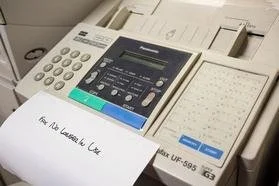
At Dunlop Media, it’s become plain that virtually everything anyone has sent us by fax over the past several years could have been sent more quickly and conveniently by email. A few wonderfully old-school clients still used it. We kept the service around for them. But eventually even the most loyal horse has to be put out to pasture.
So, effective Tuesday, September 8, 2026, Dunlop Media will discontinue its fax service. We will miss the reassuring whir, beep and screech of a fax coming through. (Maybe.) A list of our current email addresses and phone numbers is available on our Contacts page.
And if you happen to have a favorite fax memory—waiting anxiously for page 17 to arrive, discovering that page 6 somehow went to Cleveland, or simply wondering why the machine was making that noise—we’d love to hear it.
Please post your memories here, or send them by email. Yes, email.
We have, at long last, moved on.
© 2026 Dunlop Media Inc.
Photo credits: “No Longer in Use” fax machine (Izel Photography); Alexander Bain, Scottish inventor (public domain); Xerox ad (public domain/fair use); Tiananmen Square fax (public domain); Samsung fax machine (Wikimedia Commons)
Audio credits; M. Bruch: Scottish Fantasy - Stefan Jackiw - Rumon Gamba - Sinfónica de Galicia; “There’s a Great Big Beautiful Tomorrow,” created for GE’s Carousel of Progress at the 1964 World's Fair, composed by The Sherman Brothers.