

Washington had just flinched. He said hesitation was the real danger.
Listen to podcast version here:
Media commentary by Steve Dunlop
Forty-four years ago, I sat down with Alan Greenspan in his Lower Manhattan office to interview him for News at Noon on New York’s WOR-TV.
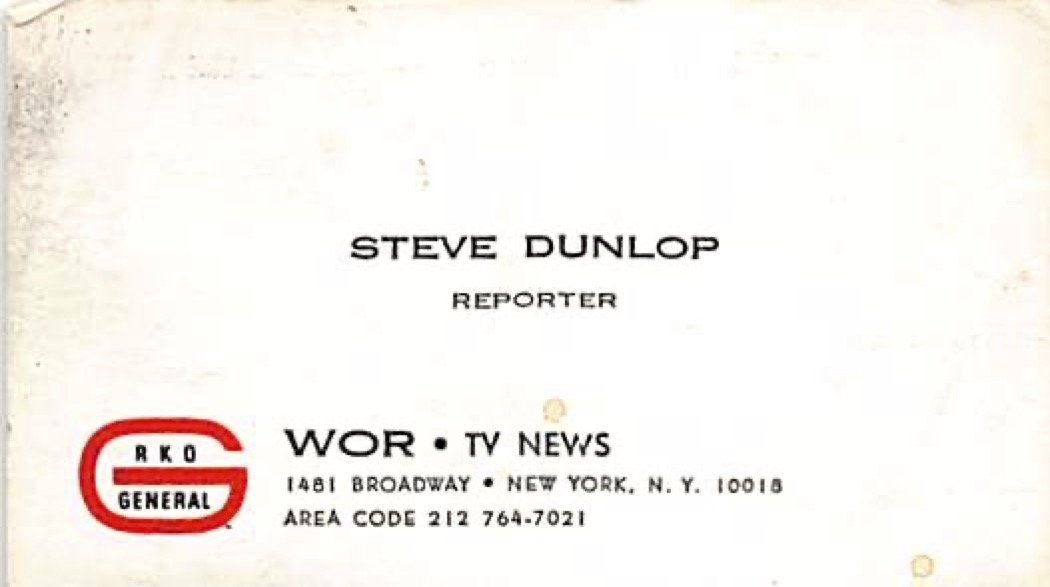
The business card I was carrying when I interviewed Alan Greenspan in 1982.
This was years before he became chairman of the Federal Reserve. At the time, he was leading President Reagan's bipartisan commission charged with finding a way to rescue Social Security from a looming financial crisis.
I was a young reporter. He was already a well-known economist.
What I remember most is not just what he said. It's how he said it.
Greenspan struck me as congenial, almost avuncular. Bespectacled and unflappable. The kind of person who could discuss an approaching fiscal train wreck with the same demeanor someone else might use to explain the weather. There was also a dry wit lurking beneath the surface. He seemed genuinely amused by the drama swirling around issues that most economists regarded as arithmetic.
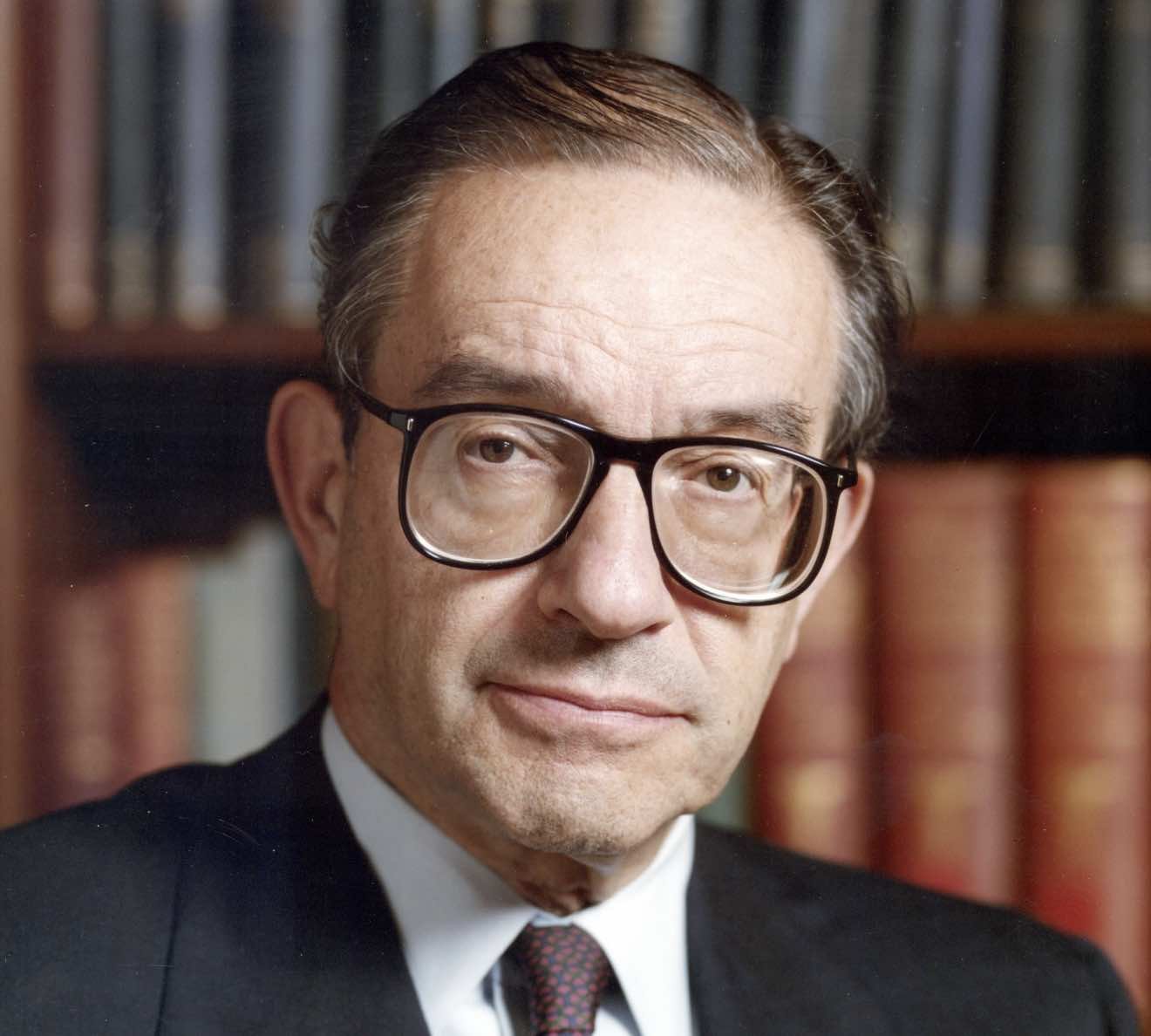
Alan Greenspan, the former Federal Reserve chair, in an undated photo from his Wikipedia page.
His office resembled something out of Mad Men. He had an expansive picture window that looked out on New York Harbor. He smoked a pipe. His secretary sat at an electric typewriter. When he needed information, he asked for printed reports, not PDFs or Excel spreadsheets. The future chairman of the Federal Reserve was working in a world that now feels almost prehistoric.
What he told me, however, sounds remarkably current.
The commission had not yet delivered its final recommendations. But Greenspan was happy to discuss the challenge facing Social Security. His message was straightforward. The problem was real, serious, and solvable. But only if policymakers acted before circumstances forced their hand.
That was hardly a popular message at the time.
Just a year earlier, in May 1981, a Republican senate had handed Ronald Reagan an early political defeat by overwhelmingly rejecting proposals that would have curtailed Social Security benefits for early retirees. The vote was 96-0.
House Speaker Tip O'Neill responded by helping cement a phrase that would become part of the American political lexicon: Social Security was the "third rail" of American politics. Touch it and you die.
Even then, elected officials understood the danger. Greenspan understood something else. Demographics and economics do not care about politics. The arithmetic eventually arrives.
What strikes me now is that the warning was delivered nearly half a century ago.
The commission eventually produced a bipartisan compromise. Congress acted. Social Security was stabilized. The immediate crisis was averted.
Yet here we are, more than four decades later, having essentially the same conversation. Not because nobody saw the problem or understood the math, and certainly not because nobody sounded the alarm.
They did. I know because I interviewed one of them.
What I remember from that afternoon is not a prophet predicting disaster. Quite the opposite. Greenspan's argument was that disaster was avoidable. His point was that delay would narrow the available choices.
That observation feels every bit as relevant today as it did in 1982. The details have changed. The political characters have changed. The technology has certainly changed – the electric typewriters are gone, of course. But the fundamental challenge remains remarkably familiar.
Some problems are difficult because we don't know how to solve them. Others are difficult because we do know how to solve them. We simply postpone the decision.
Forty-four years later, that is the most enduring lesson I carried away from Alan Greenspan's office.